IT & Corporate
Custom t-shirt price per piece in India: what GSM, print method and quantity really cost
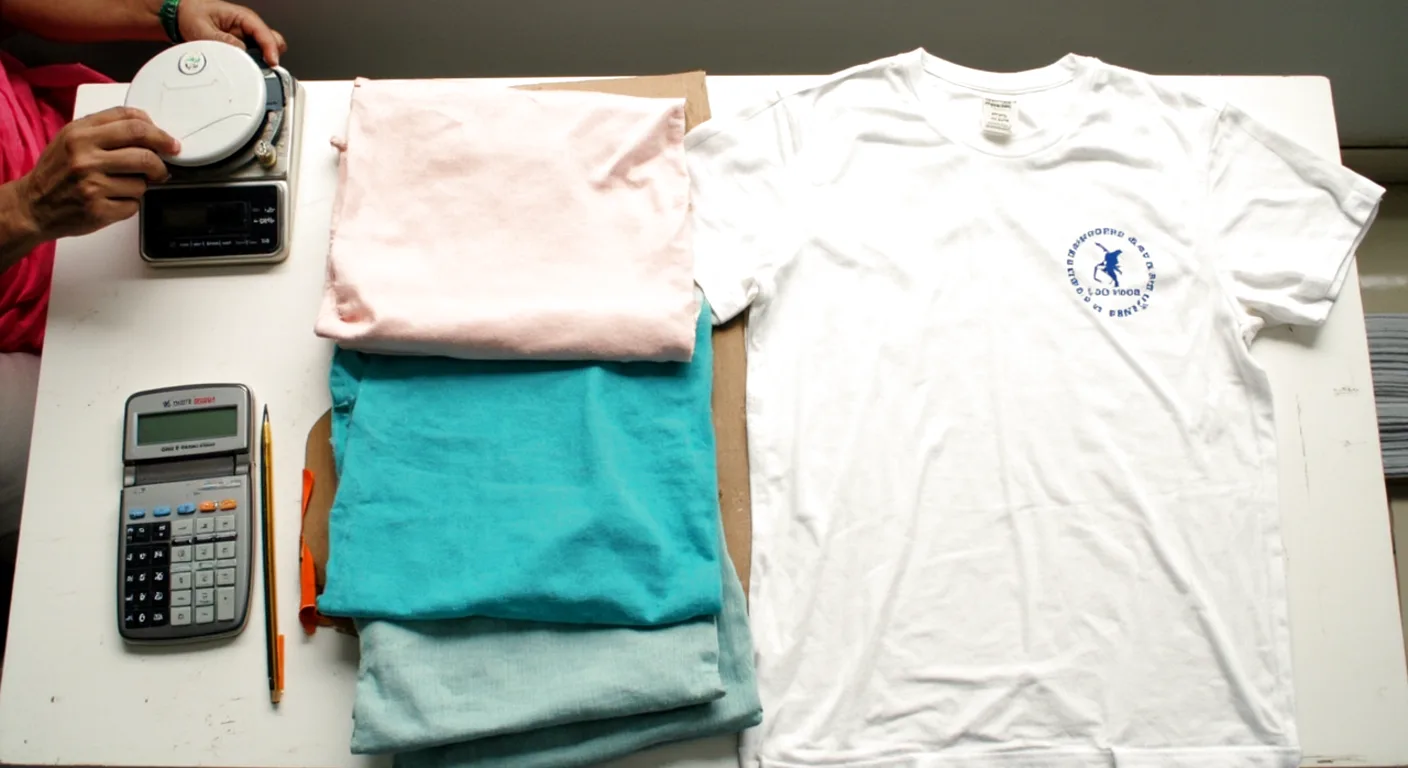
What decides the price per piece of a custom t-shirt? Fabric weight (GSM), the branding method, the quantity, and GST. Everything else is a variation on those four.
We do not publish rupee prices on this page, because they move with GSM, quantity and artwork and a stale number would mislead you. This guide shows how a quote is built so you can compare any two quotes honestly. At Sri Ganesh Textiles, Bangalore, custom t-shirts and polos start at 50 pieces per order, and we give the per-piece price in writing.
How is a t-shirt price built up?
A made-to-order t-shirt price has four layers.
| Layer | What it covers | What moves it |
|---|---|---|
| Fabric | Knitted fabric by weight, dyed to your colour | GSM, cotton vs poly-cotton vs dry-fit, colour |
| Stitching | Cutting, sewing, neck finish, labels | Round neck vs polo, collar type, size range |
| Branding | Screen print, embroidery or other method | Colours, print area, stitch count, placements |
| GST | Tax added to the invoice | Whatever rate applies to your product, shown on the invoice |
For the HSN code and rate for t-shirts and polos, see our uniform HSN code and GST guide and confirm with your accountant.
How do quantity, colour count and print area change the price?
Each one spreads or adds a setup cost.
- Quantity. Screen setup, embroidery digitising and cutting are fixed costs. They are shared over more shirts as the order grows, so per-piece cost falls, steeply at first and then more slowly.
- Colour count. Screen printing needs a separate screen per colour. A one-colour logo costs less than a four-colour one. Embroidery adds time per colour change.
- Print area. A left-chest mark uses little ink or thread. A full-back graphic uses much more.
- Placements. Each extra position is another step, so quote them as separate lines.
- GSM. A 200 GSM shirt uses more yarn than 160 GSM. This is why GSM, not the logo, usually moves price most.
Worked examples: how three common orders are priced
These show which factors dominate. No rupee figures are quoted, because your numbers come from your spec.
Example 1: 100 event tees, 180 GSM, one-colour print. Fabric and stitching dominate. Branding is one screen and one placement, so setup is small. The saving to look for is in keeping the print to one colour on one side.
Example 2: 200 polos with an embroidered logo. The polo collar and placket raise stitching cost over a round neck. Embroidery is priced by stitch count, with digitising done once. Simplifying the logo is the biggest saving available.
Example 3: 500 school house tees in four colours. Four dyed colours mean four fabric lots, so colour count affects fabric and printing, not just print. A one-colour house name or crest on each helps. See our school house T-shirt guide for how to split the quantity.
Why are a stocked blank and a made-to-order shirt different products?
Because they are not the same thing, and a lower price on one tells you nothing about the other.
A stocked blank is a ready-made shirt in standard colours, sold as is, with no custom colour, collar spec or branding. A made-to-order shirt is knitted, dyed, cut and sewn to your specification, with your decoration and a sample approval. Comparing them is like comparing a ready-made suit to a tailored one.
Marketplace listings also rarely state GSM. Two shirts at the same price can differ by 40 grams per square metre. For stocked-blank buying, our t-shirt wholesale note explains where we fit and where we do not.
How do you compare two t-shirt quotes?
Line them up on the same six points before looking at the total.
- GSM stated in numbers
- Fibre (cotton, poly-cotton, dry-fit) and knit
- Neck and collar type
- Branding method, colour count and placements
- Whether a sample is included and what it costs
- Whether GST is included, and what the delivery and packing terms are
A quote missing any of these is not comparable. Ask the supplier to fill the gap.
What should you send for an exact quote?
- Quantity, split by size and colour
- GSM and fibre preference, or “quote 160, 180 and 200”
- Logo or artwork file, with placement and size
- Whether you need polos or round necks
- Date by which you need the shirts and delivery city
Ready to order?
Send those details and we reply with a written per-piece quote within 24 hours on business days. Minimum order is 50 pieces.
WhatsApp your requirement or use the form below. Our bulk uniform minimum order guide explains how 50 pieces works across products.
FAQ
What is the price per piece of a custom t-shirt? It depends on GSM, fibre, branding, quantity and GST, so we quote it against your specification rather than publish a figure.
Does a higher GSM always cost more? Yes, because it uses more yarn. It also feels better and lasts longer, so cost per wear can be lower.
Is embroidery more expensive than printing? For a small logo on a polo the gap is often modest. For a large graphic, print is usually cheaper. Compare both on your artwork.
Does the price include GST? Quotes should state it clearly either way. Ask, and check the invoice line.
Why is a marketplace blank cheaper than your quote? It is a stocked, undecorated shirt, usually without a stated GSM or a sample approval. It is a different product.
Is there a sample charge? Send us your requirement and we confirm sample terms in the quote.