Hospitals
Ward boy and hospital attendant uniforms: a different spec from clinical wear
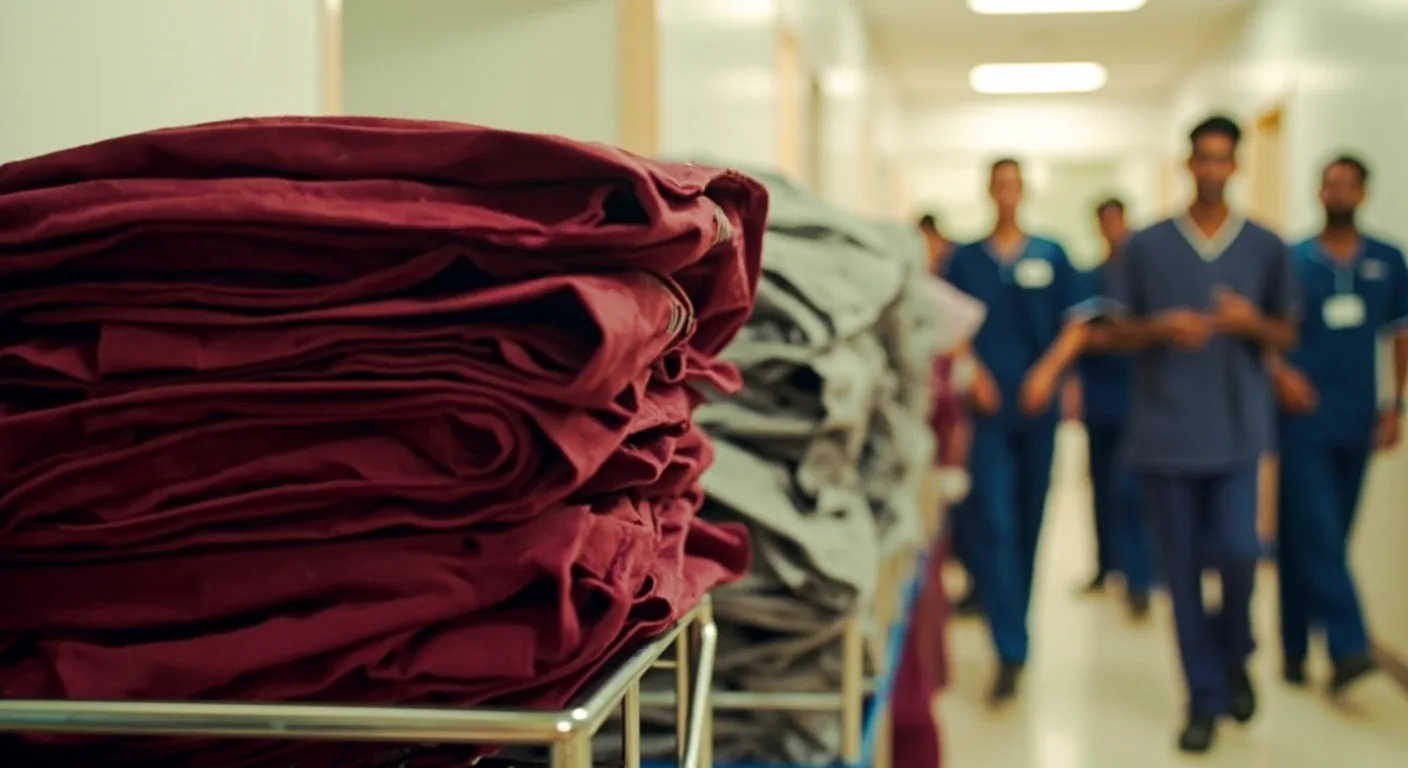
Search for hospital uniform content and almost everything you’ll find is written for nursing scrubs or doctors’ coats. Ward boys, hospital attendants, and general duty assistants (GDAs) do some of the most physically demanding work in the building and are usually an afterthought on the uniform order, ordered as a smaller size of whatever the nursing scrub pattern already is. That’s the wrong spec for the job.
This is for facilities and HR teams at hospitals and nursing homes ordering uniforms for ward boys, attendants, and GDAs as their own line item.
Why the spec should be different from a scrub set
A nursing scrub is optimised for a soft hand-feel, ease of movement, and a clinical look. A ward boy or attendant’s work (patient transfers, moving equipment and linen, wheelchair and stretcher duty, general ward support) puts more mechanical stress on the garment:
- Heavier GSM (180-220 range) holds up better under repeated pulling, lifting, and contact with equipment than the lighter fabric a scrub set uses.
- Reinforced stitching at stress points (underarm, crotch, pocket seams) matters more here than on clinical wear, because the garment takes more physical load per shift.
- A slightly looser cut through the shoulders and arms supports the physical range of motion the role needs, rather than the closer clinical fit a scrub top uses.
None of this means a worse-looking uniform. It means specifying for the actual job rather than reusing a pattern built for a different one.
Colour-coding still applies, as its own band
If your hospital uses colour to distinguish roles at a glance (nursing, housekeeping, lab, support staff), ward boys and attendants should sit in their own distinct colour, not share a band with housekeeping or general facility staff even though the fabric weight might be similar. See our department colour-coding guide for how this usually maps across a hospital.
Order it as its own line, on the same PO
The practical mistake isn’t poor fabric choice, it’s treating the attendant uniform as a rounding error on the nursing scrub order rather than its own specified line item. Put it on the same purchase order as scrubs and patient wear (so your account stays consolidated with one manufacturer and one colour reference on file) but spec it separately: different GSM, different cut, same colour-coding discipline.
Reorder cadence runs faster than clinical wear
Because the fabric takes more physical wear, expect to reorder attendant uniforms more often than nursing scrubs on the same staff-size basis. Ask your manufacturer to hold the fabric lot and colour reference against your account the same way you would for scrubs, so a replacement six months later matches rather than arriving in a visibly different shade.
How we supply ward boy and attendant uniforms
As a hospital uniform supplier, we supply ward boy, attendant, and general duty assistant uniforms to hospitals and nursing homes across India, specified separately from nursing scrubs on the same account.
- Heavier GSM and reinforced stitching specified for the role, not defaulted from the clinical pattern.
- Colour-coding kept distinct from housekeeping and clinical staff.
- Ordered as its own line item on a shared hospital purchase order.
- Reorders at the bulk price band, for a faster-wearing garment than scrubs.
If you’re sizing a ward boy or attendant uniform order, the form below reaches our sales team. Quotes go out within 24 hours, and we work from 50 pieces per order.