Schools
School uniform fabric: polyester-cotton vs polyester-viscose vs cotton
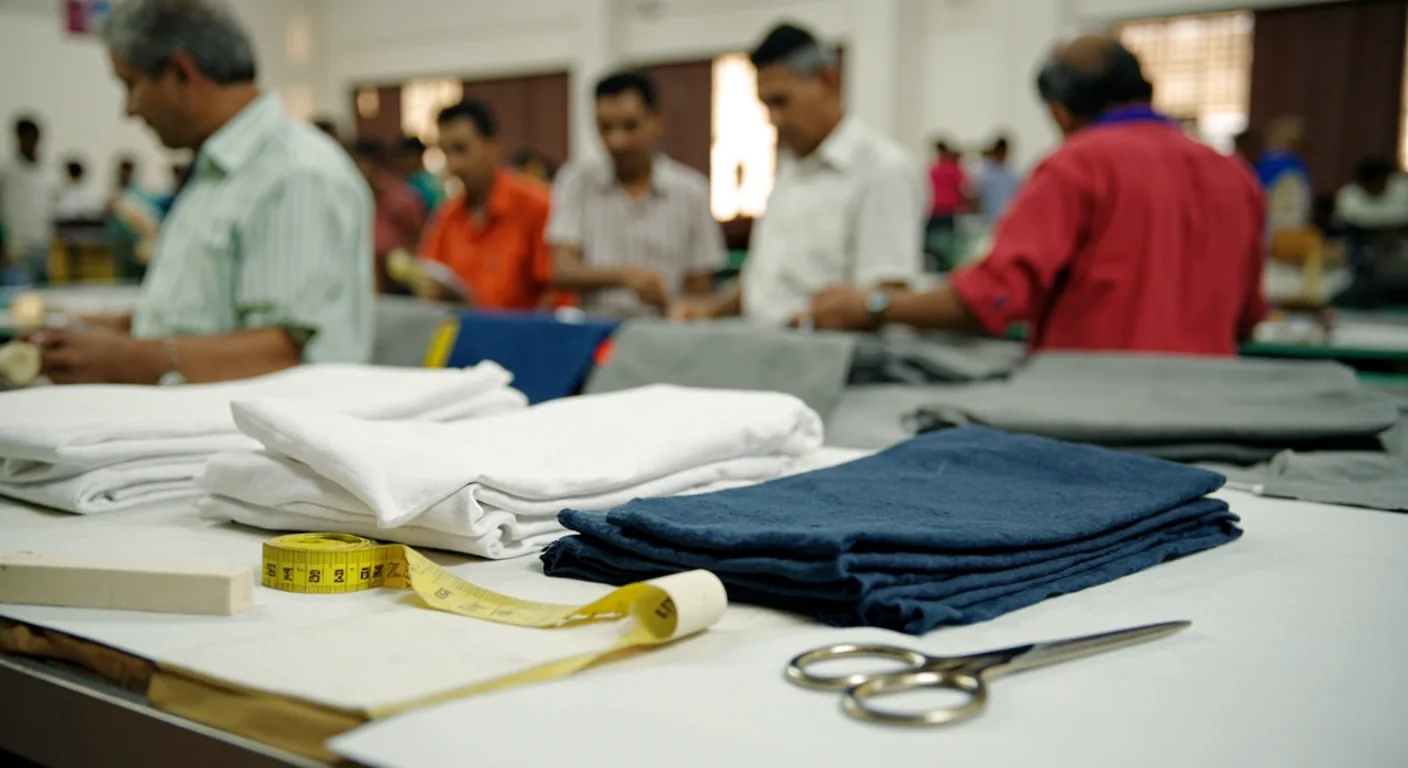
What is the best fabric for a school uniform? For shirts, 65/35 polyester-cotton at around 110 to 140 GSM. For trousers, skirts and blazers, 65/35 polyester-viscose at around 240 to 280 GSM. Cotton suits hot climates, and knit cotton or poly-cotton suits PE tees.
Sri Ganesh Textiles in Bangalore stitches school uniforms from 50 pieces. This guide explains the fabric choices so you can compare quotes on the same terms.
Which fabric goes where?
| Garment | Common fabric | Typical weight | Why |
|---|---|---|---|
| Shirt, blouse | 65/35 polyester-cotton (PC) | About 110 to 140 GSM | Light, crisp, dries fast, holds colour |
| Trouser, skirt, pinafore | 65/35 polyester-viscose (PV) | About 240 to 280 GSM | Drape, crease holds, wears well |
| Blazer, jacket | Polyester-viscose, sometimes with a lining | About 240 to 280 GSM | Structure and shape |
| PE and house T-shirt | Knit cotton or poly-cotton | Varies by knit | Stretch and breathability |
| Hot-climate shirt | Higher-cotton blend or cotton | Light shirting | Cooler against skin |
These are ranges, not rules. Send us what your school uses now and we confirm what we can match.
Polyester-cotton, polyester-viscose or cotton?
- Polyester-cotton (PC). The shirt default. The polyester gives colour retention and quick drying, the cotton adds comfort. A higher cotton share is cooler but creases more.
- Polyester-viscose (PV). The bottoms and blazer default. Viscose gives a soft drape and the polyester holds the crease and the shade. It looks formal and suits a school year of wear.
- Cotton. The coolest and softest, and the best choice for hot, humid campuses and young children. It shrinks and fades faster, and creases more.
For a deeper look at fibre trade-offs on knit garments, see cotton vs polyester T-shirts.
What GSM should a school uniform be?
GSM is grams per square metre, a measure of weight. Heavier is not always better.
- Shirting at about 110 to 140 GSM is light enough for a hot classroom and strong enough for a year.
- Bottoms at about 240 to 280 GSM hold their shape and do not turn see-through.
- Very light bottoms go shiny and thin at the seat and knees within months.
A quote that does not state composition and GSM cannot be compared with another. Ask for both, in writing.
How do you check colour fastness and pilling?
A fabric that looks good in the swatch can look tired by March. Before you approve the bulk order:
- Ask for a stitched sample, not only a swatch.
- Wash it several times at home, with a normal detergent and sun drying.
- Check whether the colour bleeds or fades, especially on navy, maroon and bottle green.
- Rub the seat and elbow areas for pilling, the small balls that appear with friction.
- Compare the washed sample against the unwashed one, side by side.
We do not quote a fabric test certificate here. If your trust or tender requires a specific test report, send the requirement and we tell you what we can supply.
When should a school choose cotton?
- Campuses in hot, humid areas, or without air conditioning
- Younger children, where comfort comes first
- Schools where parents prefer natural fibres and accept more ironing
Choose a PC or PV blend when parents want easy care, the uniform is washed daily and the school wants the same shade across years.
Fabric by the metre or a stitched uniform?
Some schools sell fabric and let parents stitch locally. This gives each child a different fit and a slightly different shade, and the school loses control of the look. A stitched uniform from one supplier gives one size file, one shade and one reorder record. If you choose the fabric route, lock the exact shade and supplier for the whole school, and keep a reference swatch. See our school uniform ordering calendar for timing.
Ready to order?
Tell us the garments, the fabric you prefer (or the sample you use now), the colours and the number of students. We confirm what we can match, share fabric samples and send a written quote. See our school uniform range, our school uniform GST guide, or WhatsApp your requirement.
FAQ
Which fabric is best for school shirts? 65/35 polyester-cotton at around 110 to 140 GSM, or a higher-cotton blend for hot climates.
What fabric is used for school trousers and skirts? Usually 65/35 polyester-viscose at around 240 to 280 GSM.
Is cotton or polyester better for a school uniform? Cotton is cooler, polyester blends last longer and hold colour. Most schools choose a blend.
How do I stop school uniform colours fading? Choose a stable dye, approve a sample after several washes, and lock the shade reference with your supplier.
What is the minimum order for school uniforms? 50 pieces. See uniform order minimum quantities.