Hospitality
Restaurant staff uniform design: Ideas that survive a dinner service
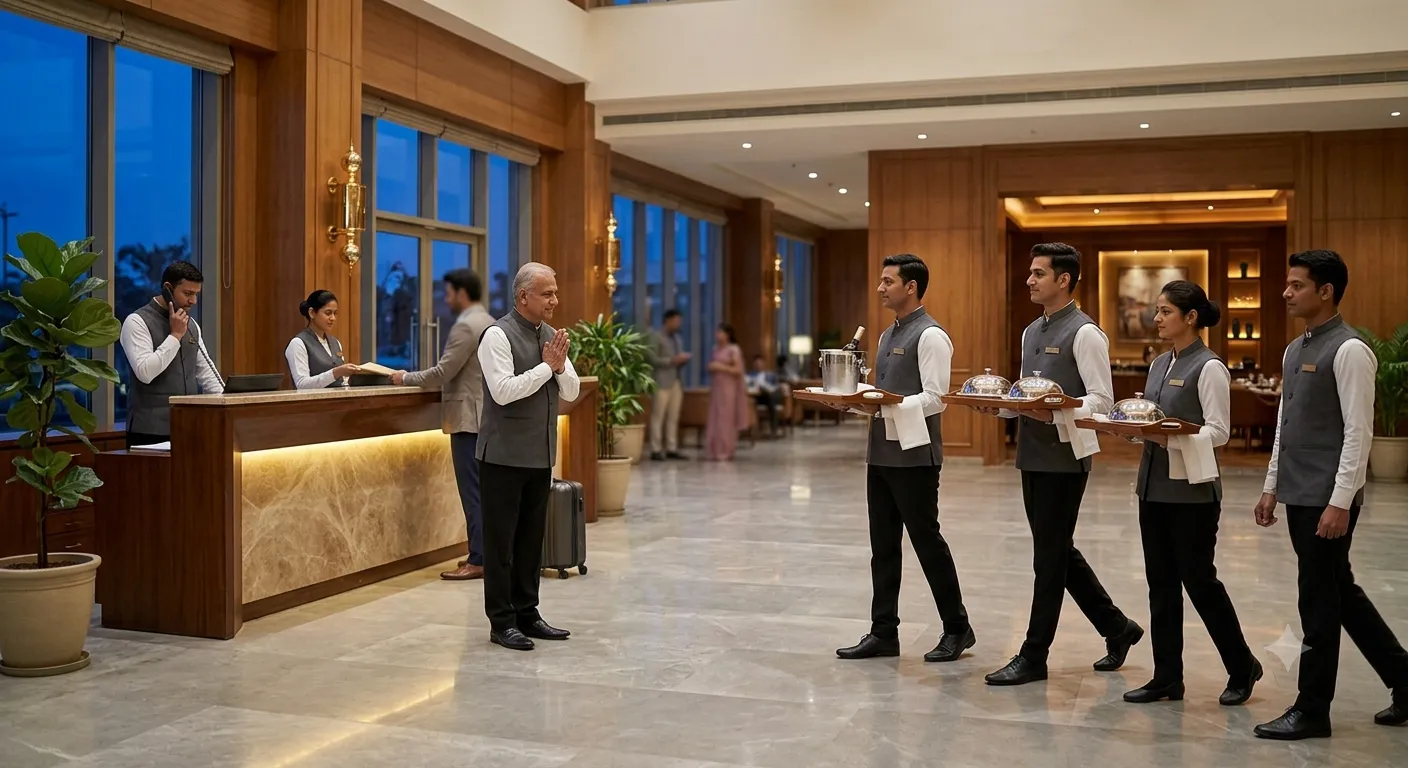
What uniforms do hotel and restaurant staff need in India? Front-of-house wear (shirt or blouse with an apron or waistcoat), kitchen whites built for heat and hygiene, banquet and event staff wear, and housekeeping uniforms for a hotel property — each cut differently because the job underneath it is different. Restaurant staff workwear specifically means the front-of-house and kitchen pieces from that list, sized and fabric-specified for a food-service floor rather than a hotel lobby. The question behind “restaurant staff uniform design” is almost never about taste. It is: how do I dress three or four different roles so a guest knows who to ask, the kitchen can work, and the whole thing still looks like one restaurant after six months of commercial laundry.
Dress by role, not by restaurant
The single most common mistake is one uniform for everybody. It saves nothing worth having and it costs the guest the ability to find a server.
Front of house. The role a guest has to identify in a crowded room. Shirt or blouse plus an apron, or a waistcoat over a shirt for a more formal room. Keep it the darkest or most distinct thing on the floor.
Kitchen. Heat, oil and stains. Chef jacket or a kitchen tee, plus an apron that can be swapped mid-shift. Kitchen whites look excellent and are a laundry commitment, so go in knowing that.
Bar. Usually the sharpest turnout in the room because the bar is on view. Waistcoat, rolled-sleeve shirt, or a branded tee for a casual venue.
Banquet and events. Scales up and down with the calendar and is often staffed casually, so it has to fit bodies you have not measured. Keep this the most forgiving cut and hold a size spread rather than a size list.
Housekeeping and support. Deliberately distinct, so a guest never mistakes a cleaner for a server.
Colour, and what service does to it
Two rules do most of the work.
The first: dark hides service. Charcoal, navy, black, deep burgundy and olive all absorb the marks a shift puts on a uniform. White and pale grey broadcast them. A white shirt on a busy floor is a decision to replace shirts more often, which is a real cost, not a style penalty.
The second: the apron is the brand, the garment is the base. Aprons are cheap to replace and easy to run in your accent colour. Putting the brand colour on the apron rather than the shirt means a rebrand costs aprons, not a whole re-issue.
| Room | Base | Accent |
|---|---|---|
| Fine dining | Charcoal or black | Waistcoat, tie |
| Casual and bistro | Navy or olive | Apron |
| QSR and cafe | Branded tee | Cap, apron |
| Banquet | Black | Sash or waistcoat |
Fabric, honestly
Poly-cotton blends around 180 to 200 GSM are what most volume restaurant uniforms are made from, and for good reason: they take a commercial wash, keep colour, and dry fast enough to run two sets per person.
Pure cotton is more comfortable in a hot kitchen and creases and shrinks more. Pure linen looks beautiful on a menu photograph and does not survive a service rota. If a supplier agrees to linen for a 200-cover restaurant without mentioning that, ask more questions.
Making a second outlet match the first
This is the thing that goes wrong most often, and it is entirely avoidable.
Colour is the culprit. “Navy” is not a specification. At sample stage, fix the colour to a reference and have your supplier hold that reference on file against your account. When outlet two opens, it is produced against the record rather than re-matched by eye from a garment that has already been washed forty times.
Do the same with the cut and the fabric weight. Three things on file: fabric, weight and colour reference. Do that and outlet five looks like outlet one.
A working starting point
For a 40-cover restaurant with two services:
- Two sets per person, so one is always clean
- Front of house in charcoal, brand colour on the apron
- Kitchen in black rather than white unless you have the laundry for whites
- Banquet held as a size spread, not a name list
- One purchase order, roles specified separately
Ask for a sample of the fabric and one finished set before the run, and wash it the way your laundry will.