Hospitals
OT and isolation gowns: reusable vs. disposable, and what to specify
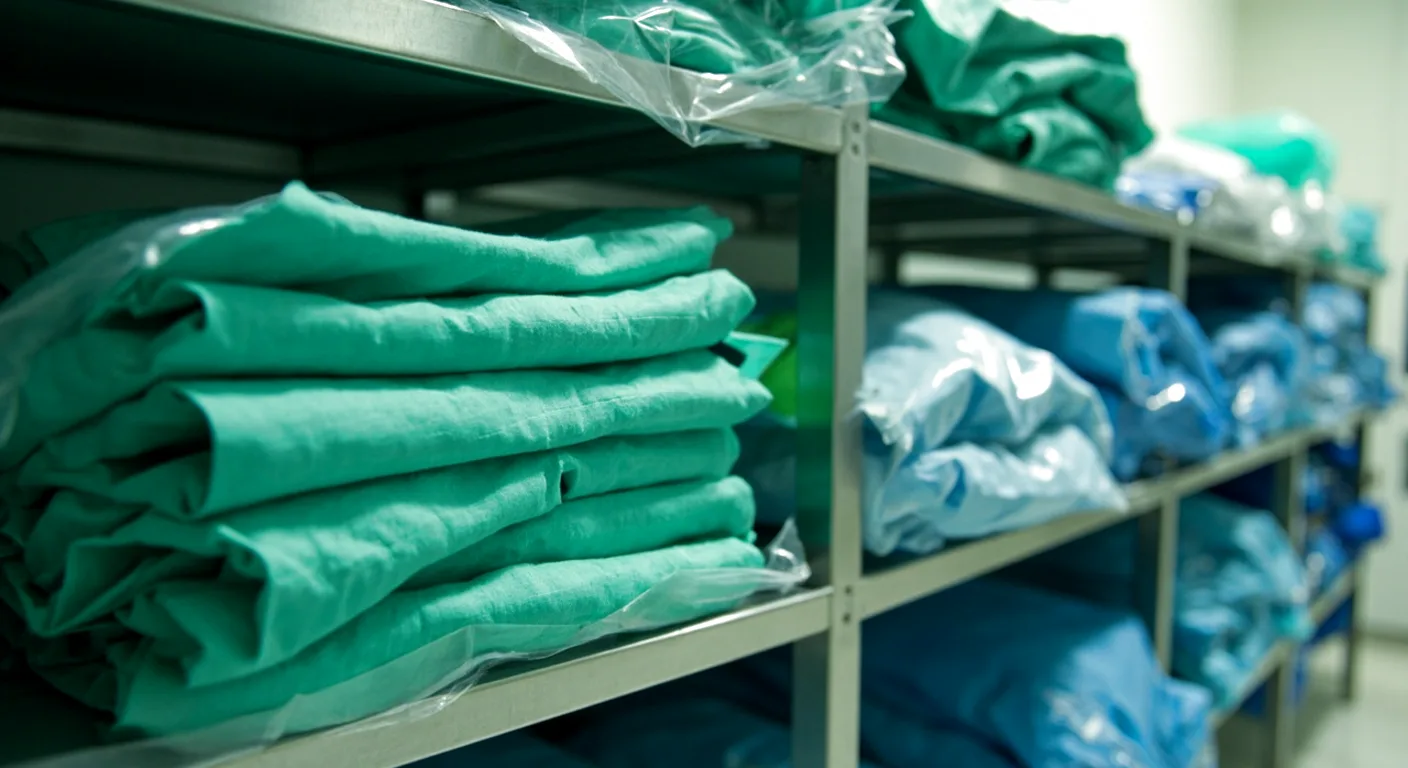
An OT or isolation gown quotation reads differently from every other hospital uniform order on this site, because it’s usually infection control or the OT in-charge specifying it, not HR or facilities. The fabric itself is a different category: nonwoven, rated by barrier level, and the reusable-versus-disposable decision is a real cost and infrastructure question, not a style preference.
This is for infection-control teams, OT managers, and procurement staff specifying surgical and isolation gowns separately from the scrubs and nursing uniforms covered elsewhere on this site.
What the fabric numbers actually mean
Surgical and isolation gowns are mostly made from nonwoven fabric, not woven or knitted cloth, and the two common constructions are:
- SMS (spunbond-meltblown-spunbond), a three-layer nonwoven that balances fluid resistance with breathability. The common choice for standard OT and isolation use.
- SMMS (spunbond-meltblown-meltblown-spunbond), a four-layer variant with a higher fluid barrier, used where exposure risk is higher.
GSM (grams per square metre) on a nonwoven gown tracks fabric weight and, roughly, barrier strength: lighter gowns (around 20-35 GSM) suit lower-risk, shorter procedures; heavier gowns (45-90 GSM) suit longer procedures or higher fluid-exposure risk. Ask for the GSM and construction type on the quotation, specified separately for OT versus general isolation use, rather than one blanket spec for both.
Sterile vs. non-sterile, decided by use case
Sterile, individually packed gowns are for the OT itself, where a breach in sterility has direct surgical consequences. Non-sterile isolation gowns (ward isolation, general barrier precautions) don’t need individual sterile packaging and cost meaningfully less per unit. Confirm which category each line item on your order falls under; a hospital ordering sterile OT gowns at isolation-gown pricing, or the reverse, is a quotation error worth catching before the order ships.
Reusable vs. disposable: an infrastructure decision
This is the real fork in the order, and it depends on what your hospital can actually support, not which option looks more modern:
- Disposable (single-use) nonwoven gowns need no laundering infrastructure and remove any risk of improper reprocessing, but cost accumulates per procedure and the order volume scales directly with OT throughput.
- Reusable gowns (heavier woven or coated fabric, rated for a set number of wash cycles) cost more upfront per piece but can be materially cheaper over their rated lifespan, provided your laundering process actually meets the manufacturer’s reprocessing standard. A hospital without a validated reprocessing setup for reusable gowns is usually better served by disposables, regardless of the long-run cost argument.
Ask a manufacturer to quote both options with the actual cost-per-use math, not just the per-piece price, since that’s the number that decides which is cheaper for your actual volume.
What to put on the OT/isolation gown purchase order
- GSM and construction (SMS/SMMS or equivalent) specified per gown type, not one figure for the whole order.
- Sterile vs. non-sterile stated per line item, matched to OT versus general isolation use.
- Reusable or disposable decided against your actual laundering infrastructure, not assumed.
- Rated wash-cycle count stated for any reusable gown, in writing.
How we supply OT and isolation gowns
As a hospital uniform supplier, we supply OT and isolation gowns to hospitals and diagnostic chains across India, specified by GSM, construction, and sterile packaging requirement on the quotation.
- Fabric construction and GSM confirmed before the order, per gown type.
- Sterile and non-sterile lines quoted and packaged separately.
- Reusable and disposable options costed against your actual volume.
- Supplied alongside scrubs, patient wear, and ward uniforms on the same hospital account.
If you’re sizing an OT or isolation gown order, the form below reaches our sales team. Quotes go out within 24 hours, and we work from 50 pieces per order.