Safety & PPE
JCB safety shoes: what the badge actually means, and how to buy them in bulk
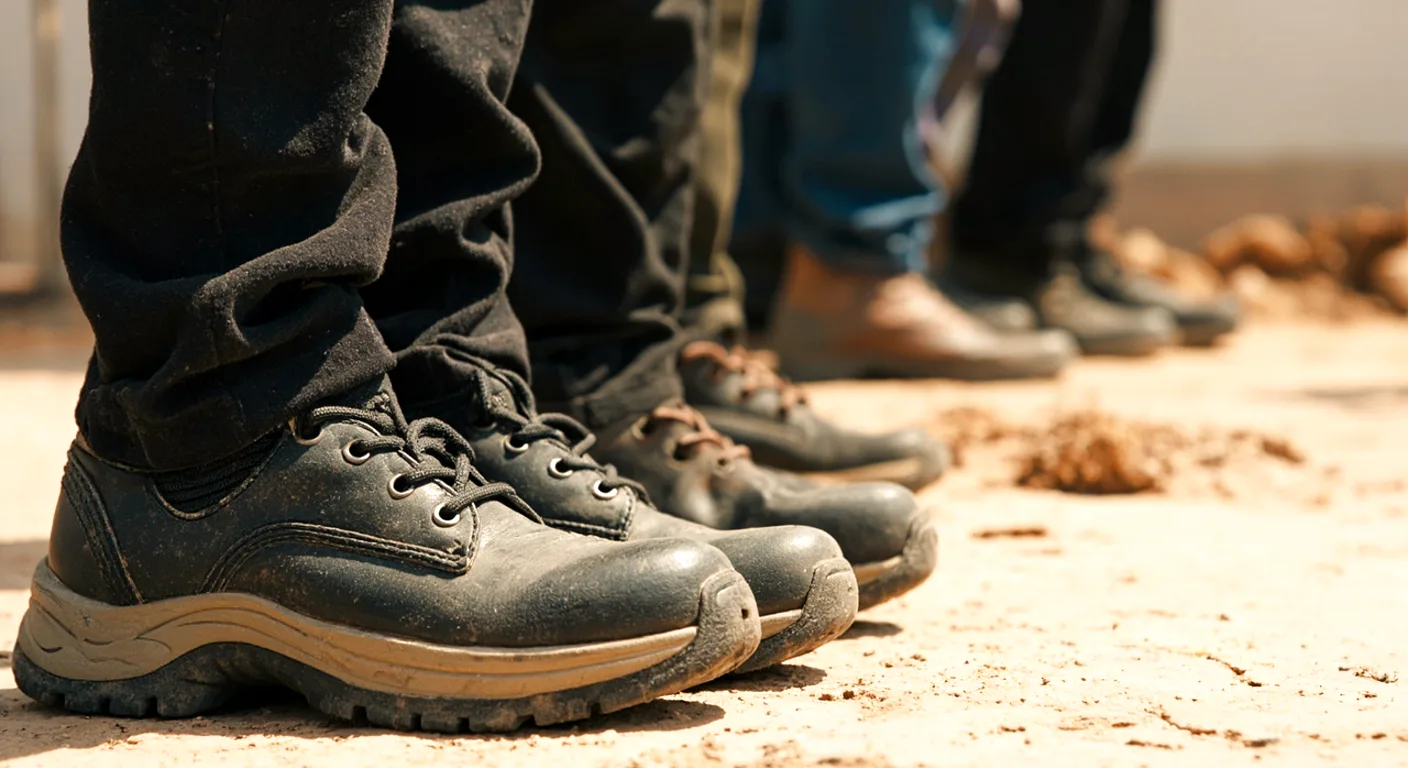
Start with the thing most pages selling JCB footwear will not tell you: JCB safety shoes are a licensed range. The machinery company licenses its name to footwear manufacturers; it does not make the shoes.
That is not a criticism, and it does not make the product worse. Licensed ranges are common across workwear and some are very good. But you should know what the badge on the boot is telling you, because it is telling you about brand recognition rather than about a manufacturing lineage.
A note on what we are: we supply JCB safety shoes in bulk against your specification. We are not an authorised dealer and do not claim to be.
Why crews actually like them
Compliance is a people problem more than a procurement problem. PPE that workers are happy to wear gets worn; PPE they resent gets left in the locker or the van, and unworn PPE protects nobody.
On construction and earthmoving sites, the JCB name carries weight with crews in a way that a purely industrial brand does not. That is a real advantage and worth putting a number on when you compare quotes — a slightly more expensive boot that is actually worn every shift beats a cheaper one that is not.
If your compliance problem is people not wearing footwear rather than footwear failing, this is a genuine reason to specify it.
What the licence means for your specification
Because the range is licensed and manufactured under agreement, two things follow:
Pin the article number, always. Licensed ranges are refreshed on their own schedule. If your rate contract names only “JCB safety shoes”, a mid-contract change leaves you with a mixed floor and a fresh approval cycle.
Certificate against the article, not the badge. Ask for the IS 15298 Part 2 test certificate for the exact article shipped, in the format your auditor accepts. The licensor’s brand reputation is not a certification, and an auditor will ask for the document, not the logo.
Write:
JCB, article number [X], certified to IS 15298 Part 2, toe cap type, sole compound, sizes per attached file, ISI test certificates against the article supplied.
Sole and toe cap, for site work
Construction sites are rough on footwear in ways warehouses are not: uneven ground, ankle-roll risk, splash exposure, and sustained sun on the material.
- Ankle height — high-ankle or boot rather than low-cut, on anything uneven
- Sole — check what you are getting. PU is comfortable and lighter; rubber and nitrile survive heat, oil and site debris better
- Toe cap — steel is cheaper and heavier; composite is lighter and passes metal detection. Both meet 200 joules when certified
Sizing on a site with contractors
Construction headcounts turn over faster than plant headcounts, which makes the size file and the top-up policy matter more than the main order.
Measure on site, keep the file, and agree in writing what a small replacement batch costs and how fast it arrives. On a site where crews rotate, that is the number you will use most.
On the price list
jcb safety shoes price list is searched a lot. Any list online is a single-pair retail number for one article, and a site order prices on article, toe cap, sole, ankle height, quantity and contract length.
Send the article, the quantity and the delivery city and you get a written price inside 24 hours.
How we supply
We supply JCB safety shoes in bulk across India against your article and specification, with ISI test certificates against what ships, sizes measured on site and held on file, and the rate held for the contract year.
If you are kitting out a site rather than just buying footwear, helmets to IS 2925 and hi-vis to IS 15809 ship on the same purchase order — which on a construction site is usually what you actually need. Minimum 50 pairs.
See the footwear range · compare the brands · PPE as one kit, or request a quote.