Safety & PPE
PPE manufacturer in India: buying the whole kit as one line item
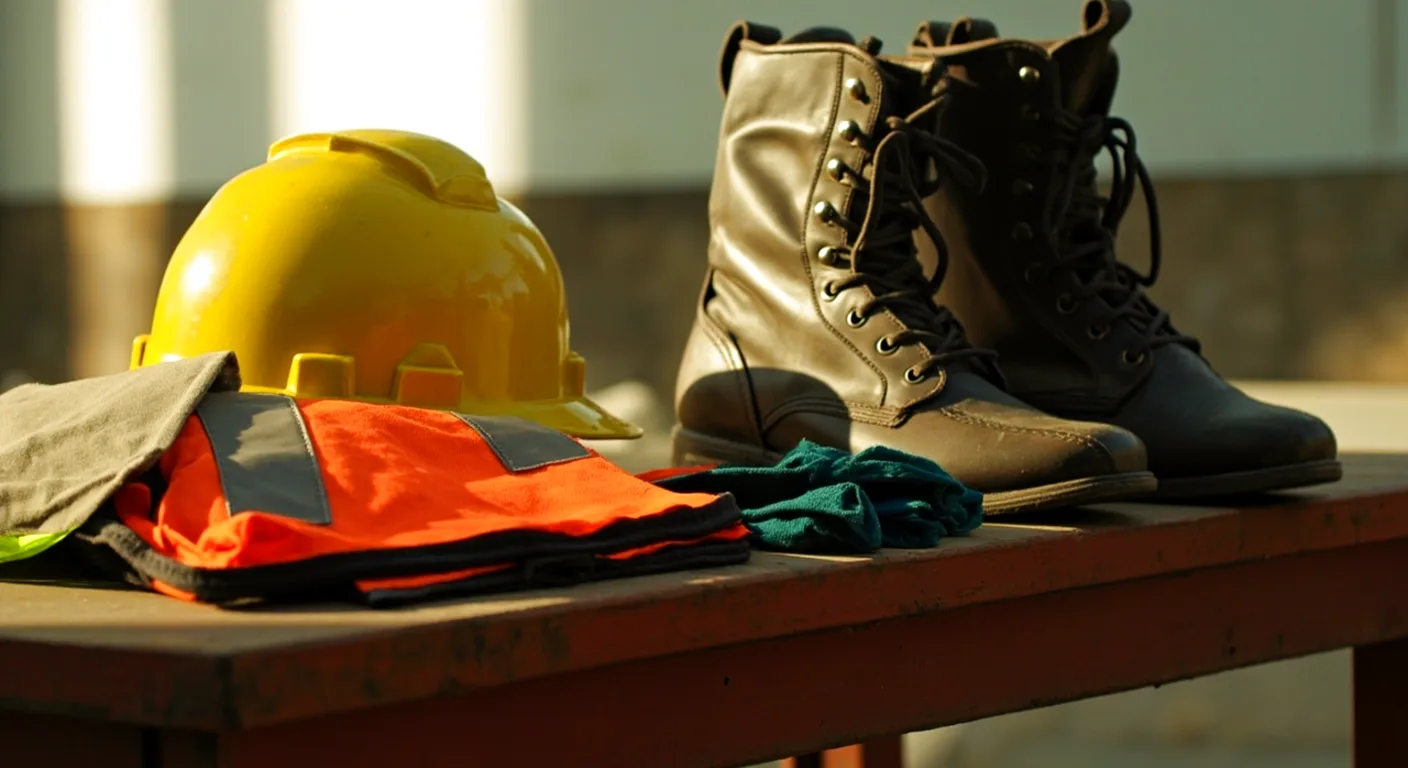
Most plants buy PPE the way it arrived historically — helmets from one vendor, safety shoes from another, hi-vis from a third, gloves from whoever the stores clerk calls. Each item is cheap. The programme is expensive, because the cost sits in the coordination rather than the goods.
This guide is for safety officers, plant heads, contractors, and procurement teams consolidating PPE onto a single purchase order.
What goes into a standard kit
A general-purpose industrial or construction kit, issued per head:
- Industrial safety helmet to IS 2925, in the colour assigned to the role.
- Safety shoes to IS 15298, with the toe cap and sole type matched to the work.
- High-visibility vest or jacket to IS 15809, for anyone working near moving plant, near traffic, or in low light.
- Hand protection, selected by hazard — cut, chemical, and heat resistance are different gloves, not one glove.
- Eye protection, where grinding, cutting, chipping, or chemical splash is present.
- Coverall or workwear to IS 13688 where the role calls for it.
Both helmets and safety footwear are specified in more detail on their own, but the point of the kit is that they are ordered, costed, and issued together.
Per-head costing is the change that matters
The moment PPE is costed per head rather than per SKU, several things become visible.
- Budgeting becomes a headcount question. A site adding 200 workers has a known PPE cost, not a discovery.
- Contractor recovery becomes possible. If contractors are charged for kits issued to their workers, per-head is the number you invoice against.
- The cheap-item trap closes. A glove saving of a few rupees, as a fraction of the per-head kit cost, is visibly not worth the failure risk.
- Comparison across suppliers becomes real. Two PPE kit suppliers quoting item lists are hard to compare. Two quoting the same kit definition per head are not.
Define the kit first, then get it quoted per head. Not the other way round.
Kit variants by role
One kit for the whole site is the wrong simplification. Four or five defined variants is usually right.
- General worker kit — helmet, safety shoes, hi-vis vest, general-purpose gloves.
- Hot-work kit — helmet, heat-resistant sole footwear, flame-resistant coverall, heat-resistant gloves, eye and face protection.
- Electrical kit — helmet, electrically insulating footwear with no metal eyelets, insulated gloves.
- Supervisor and visitor kit — helmet in the assigned colour, safety shoes, hi-vis vest. Visitor kits should be separate stock, cleaned and reissued.
- Field and logistics or fleet kit — hi-vis, safety footwear, and rider head protection to IS 4151 where two-wheelers are involved, which is a different standard from the site helmet.
Name each variant, list its contents, and put the names on the purchase order. A construction PPE supplier working from named kits will not send you the wrong sole type.
Issuing to new joiners
The kit model earns most of its value here, because a new joiner cannot start work without full PPE. What works:
- Hold pre-packed kits at stores in the common size combinations, sized as a set rather than item by item.
- Issue against a signed acknowledgement listing every item and size. This is your audit evidence and your replacement baseline in one document.
- Pack the induction paperwork into the kit — colour-coding scheme, replacement policy, the standard each item meets.
- Reorder against a reorder level, not a monthly guess. Attrition and intake are both predictable enough to set one.
Sites that also issue a workwear set at induction should pack it into the same kit, so the joiner receives one bag, once.
Replacement policy
Items in the same kit have different lives, which is the argument against replacing the whole kit on a fixed calendar.
- Helmets — replace on the manufacturer’s stated service life, and immediately after any impact regardless of visible damage.
- Safety shoes — replace on sole wear, upper failure, or a compromised toe cap. Inspect rather than assume.
- Hi-vis — replace when the reflective tape has lost retroreflectivity or the fluorescent base has faded. This is the item people keep longest past its useful life, because it still looks like a garment.
- Gloves — the fastest-consumed item. Replace on wear, and stock accordingly.
- Coveralls — replace on a wash-cycle basis, which for facility and housekeeping teams runs faster than for production staff.
Write the policy down, per item, and log every replacement against the employee. An auditor asking about PPE is asking whether you can produce that log.
Single-PO procurement
Consolidating the kit onto one purchase order removes work that no one measures:
- One vendor to negotiate, evaluate, and renew.
- One consolidated invoice per drop, not six.
- One consignment to receive and one goods-receipt entry.
- One documentation set, arriving with the goods rather than chased afterwards.
- One rate contract covering scheduled refresh drops.
For multi-site groups, the same purchase order should support separate drops per site at the same per-head rate, with no tier-2 delivery premium — the way multi-location corporate teams already run uniform procurement.
How we supply PPE kits
We supply PPE kits, safety helmets, safety footwear, hi-vis, and workwear to plants, construction sites, and contractors across India, from 50 pieces per order upwards.
Our process:
- Kit variants defined and named with you before quoting.
- Per-head pricing in writing, locked for the order.
- Samples approved before bulk release.
- Kits pre-packed and sized as sets for new-joiner issue.
- Standards documentation supplied with the consignment for your audit file.
- Rate contracts with scheduled refresh drops, multi-site from a single purchase order.
If you are consolidating PPE procurement onto one vendor, the form below reaches our sales team. Quotes go out within 24 hours, and we work from 50 pieces per order.