Safety & PPE
Tiger safety shoes in Bangalore: top-ups in days, not weeks
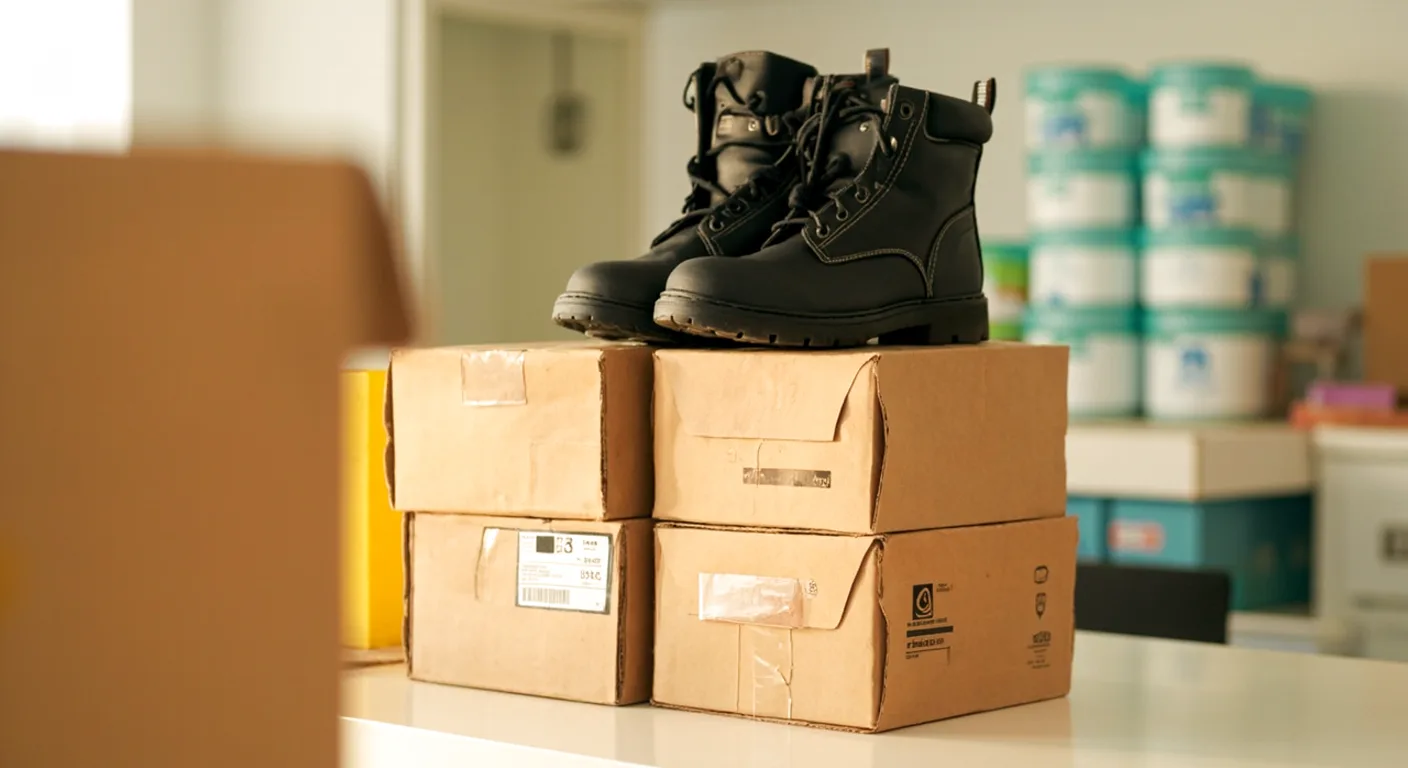
The main safety shoe order is the easy part. Everyone quotes for it, everyone delivers it, and it is the number that goes in the comparison sheet.
What actually decides whether a footwear programme works is the situation nobody quotes for: a site needs six pairs, next week, because new joiners arrived and cannot start work without them.
That is where being in the same city stops being a marketing line and starts being the whole point.
A note on what we are: we supply Tiger safety shoes in bulk against your specification. We are not an authorised dealer and do not claim to be.
Ask these three questions before you sign anything
Of us, and of everyone else you are considering:
- What does a six-pair top-up cost? Is it the contract rate, or repriced as a small order?
- How long does it take to my site? Not “in stock” — days to delivery at Peenya, or Bommasandra, or Hoskote.
- Do you already have our sizes? If the answer is no, every top-up starts with measuring somebody.
A supplier who is a few rupees cheaper per pair on 400 pairs, and takes a month on six, costs you more over a contract year than the difference. Bangalore headcounts turn over, and the top-up is not an edge case — it is a monthly event.
Why we hold your size file
Every order we run starts with measurement on site rather than a size chart, and the result stays on record.
That file is what turns a top-up into a phone call. You tell us six names or six sizes, we ship. Nobody re-measures, nobody guesses, and the new joiner is working the same week.
For sites across the city — Peenya, Jalahalli, Whitefield, Electronic City, Bommasandra, Jigani, Attibele, Nelamandala and the Hoskote belt — that is a same-week conversation rather than a procurement cycle.
One rate, held for the year
The second thing worth more than unit price:
- The same rate on top-ups as on the main order
- The rate held for the contract year, so a mid-year batch is not a renegotiation
- One rate card if you run more than one location
Get all three in writing. They are rarely on the first quote and always available if you ask.
Specify the article
Tiger, article number [X], certified to IS 15298 Part 2, toe cap type, sole compound, sizes per attached file, ISI test certificates against the article supplied.
This matters especially for top-ups. Without a named article, the six replacement pairs arrive visibly different from the four hundred, and somebody notices.
Toe cap — steel is cheaper and heavier and trips metal detection; composite is lighter and passes it. Both meet 200 joules when certified.
Sole — PU or dual-density PU for general plant and warehouse work; rubber or nitrile where there is heat, oil or chemicals.
Certificates against the article
ISI test certificates go out against the article actually shipped, in the format your auditor accepts — on the main order and on the top-ups, so the file stays complete rather than having six pairs in it with no paperwork.
On the price
No published list. Any number online is a single-pair retail price. A contract order prices on the article, toe cap, sole, quantity, contract length and top-up terms.
Send the article, the quantity and the sites, and you get a written price inside 24 hours on business days.
Minimum 50 pairs on the main order. Top-ups below that, at contract rate, for accounts on a rate contract.
Tiger safety shoes: the specification guide · choosing a supplier · footwear range, or request a quote.