IT & Corporate
T-shirt wholesale in India: buying blanks, and when made-to-order beats them
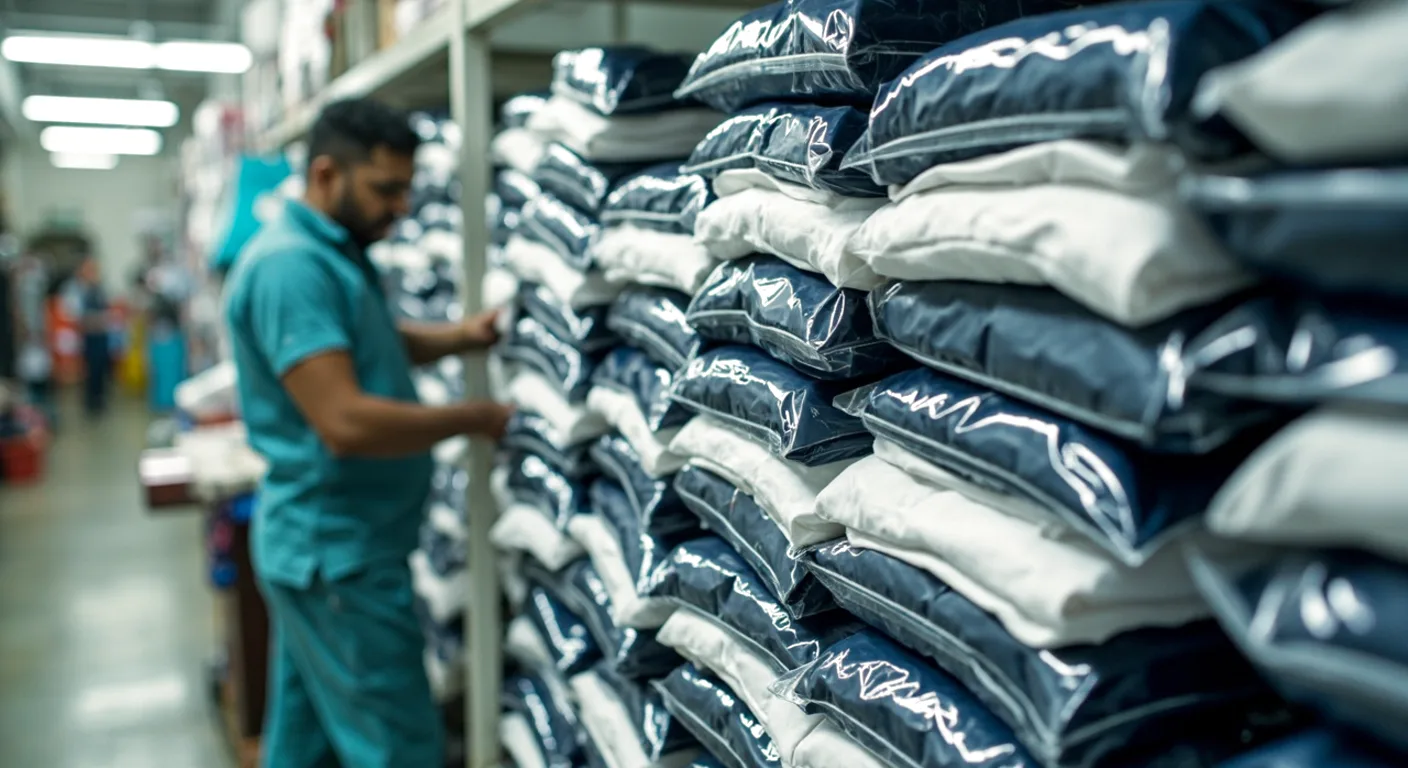
“Wholesale” and “manufactured” are two different purchases, and most enquiries use the words interchangeably until the shirts arrive.
Wholesale means buying finished blank stock that already exists, usually with printing added afterwards. Made to order means the garment is cut and stitched for you. Both are legitimate. They fail in different ways, and the failure is nearly always predictable from the order size and the deadline.
Where wholesale blanks genuinely win
Speed. The stock exists. If you need 300 shirts for an event in twelve days, wholesale plus printing is often the only route that makes the date, and no amount of paying extra fixes a production lead time.
Small quantities. Below a few hundred pieces, the setup cost of a stitched run is spread across too few units. Blanks avoid that entirely.
One-off use. An event tee, a campaign, a sports day. If the shirt is worn twice, paying for fit and longevity is money spent on nothing.
Trying a colour before committing. Order fifty blanks, print them, see how the shade reads under your office lighting, then commit the real run.
Where wholesale quietly costs you
Size distribution is fixed. You buy the ratio the wholesaler stocked, not the ratio your workforce actually is. For an Indian institutional headcount that mismatch is routine — a stack of unworn XLs and a shortage of mediums, and the shortage is what people remember.
Shade drifts between batches. Blanks are dyed in lots. Reorder in four months and the navy is a slightly different navy. On an event tee nobody notices. On a uniform worn beside last year’s, everybody does.
You cannot change anything. No pocket, no different collar, no adjusted length, no custom neck label. You get the garment that exists.
Article availability is not guaranteed. The blank you standardised on can simply stop being stocked, and then you are re-approving a replacement mid-programme.
The honest decision rule
| Situation | What to buy |
|---|---|
| Under ~200 pieces, one-off | Wholesale blanks |
| Deadline under three weeks | Wholesale blanks |
| Recurring uniform issue | Made to order |
| Shade has to match a brand colour | Made to order |
| Reordering against a size file | Made to order |
| Needs a pocket, a specific collar, a neck label | Made to order |
The mistake worth avoiding is buying blanks for a recurring uniform because the first order was cheap, then discovering at reorder that the shade moved and the sizes never fitted. That is not a saving, it is a cost deferred by four months.
What to specify either way
Whichever route you take, the same four things decide what arrives:
GSM. 160 is light and event-grade. 180 is the volume default for corporate issue. 200 is substantial, and where polos and daily-wear uniforms belong. A quote that does not state GSM is quoting 160 and hoping you do not ask.
Fabric. Cotton breathes and creases. Poly-cotton holds shape and colour through far more washes and is the institutional default. Dry-fit polyester is for sport and field work, and reads as sportswear in an office.
Neck construction. Ribbed collar with taping across the shoulder seam. Untaped necks ripple after a dozen washes, and a team in wavy-collared shirts looks worse than a team in no uniform at all. On polos, ask whether the collar is knitted or cut from jersey — the second loses its shape.
Shrinkage. Ask whether the fabric is pre-shrunk and what to expect after the first wash. Then wash the sample once before approving. This single step prevents the most common bulk complaint there is.
Printing on wholesale blanks
Screen printing is the volume answer — cost per piece falls sharply with quantity because setup is per design, not per shirt.
Embroidery reads as more premium, lasts as long as the garment, costs more per piece and discounts much less with volume. Right for a small chest logo on a polo, wrong for a full back design.
PMS matching is harder on blanks than on a made-to-order run, because you are matching a print to a garment shade you did not choose. If the brand colour matters, say so before the blanks are bought, not after.
Polo blanks specifically
polo t shirt wholesale is searched almost as often as the round-neck equivalent, and polos are less forgiving. The collar is the entire visual impression, and a cheap blank polo announces itself from across a room once the collar goes soft.
If the polo is customer-facing — hotel, retail, front desk, security — this is the one category where we would push you toward a stitched run even at three hundred pieces.
How we work
Sri Ganesh Textiles manufactures t-shirts and polos in Bangalore from 50 pieces, in cotton, poly-cotton and dry-fit at 160, 180 and 200 GSM, with screen printing and embroidery in-house.
We will also tell you when made-to-order is the wrong answer for your order. If you need 300 event tees in twelve days, a stitched run cannot make that date and we will say so rather than take the order and miss it.
Every quote states fabric and GSM against the price so you can compare it against anyone else’s, and a stitched sample reaches you within 5 business days before any bulk run starts.
See the t-shirt range · what to put on the spec · sports and gym kit, or request a quote.