IT & Corporate
T-shirt manufacturer in India: GSM, fabric, printing and what to put on the spec
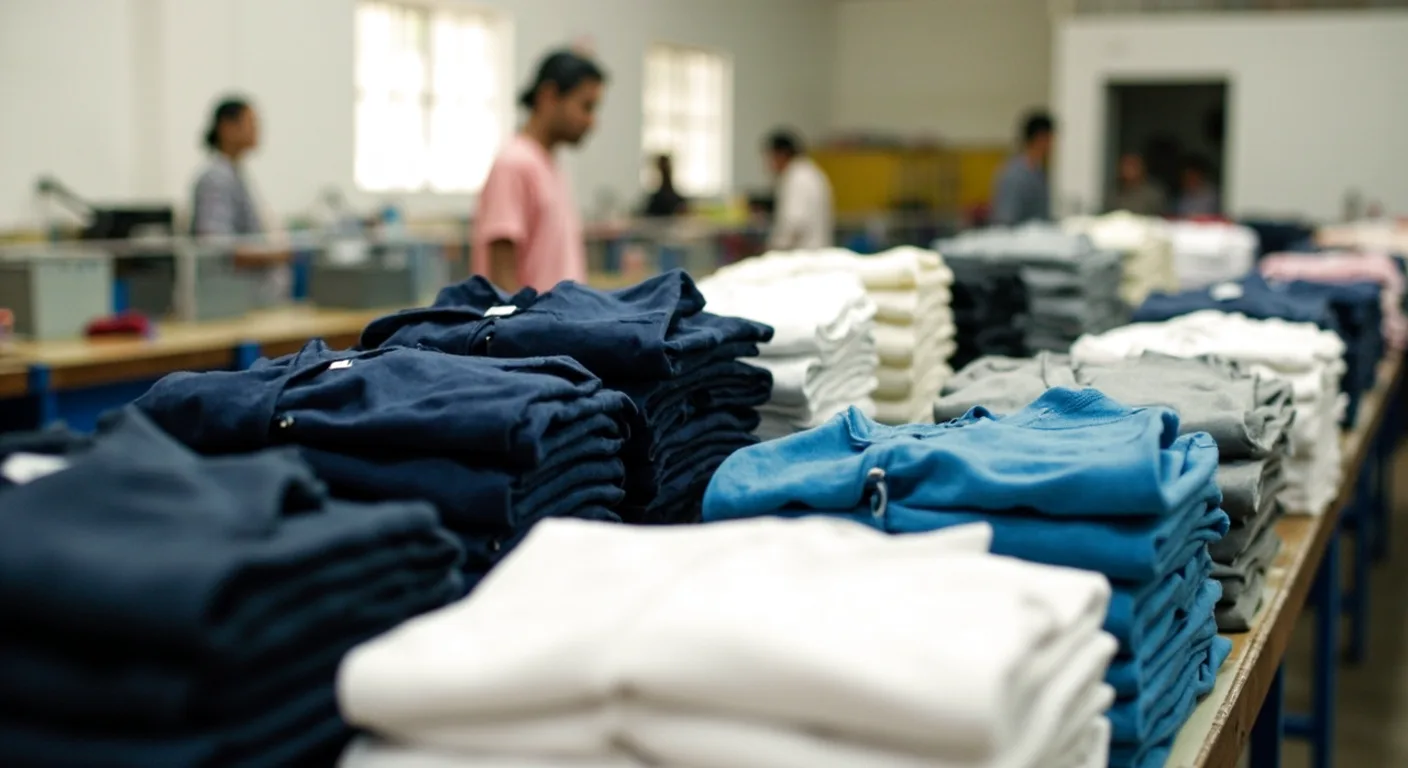
Two quotes for “500 round-neck t-shirts, navy, logo on chest” can differ by more than double, and both can be honest.
The gap is not margin. It is GSM, fabric, neck construction and print method — four variables that are invisible in the enquiry and decide everything about what arrives. This is what each one does, so you can write a spec that gets you comparable numbers.
GSM: the number that moves the price most
GSM is grams per square metre — the weight of the knit. It is the single biggest lever on both cost and how the shirt feels.
| GSM | Feel | Where it belongs |
|---|---|---|
| 160 | Light, thin, cheapest | Events, giveaways, hot-weather single-season use |
| 180 | The middle. Holds shape | Corporate issue, the volume default |
| 200 | Substantial, opaque, heavier | Polos, customer-facing staff, uniforms worn daily |
A 160 GSM tee and a 200 GSM tee in the same colour look identical in a photograph and feel completely different in the hand. If a quote does not state GSM, it is quoting 160 and hoping you do not ask.
Rule of thumb: anything a person wears as a uniform several days a week should not be below 180.
| GSM | Feel | Holds shape after | Best for | Relative cost |
|---|---|---|---|---|
| 160 | Light, slightly sheer in pale colours | ~15 to 20 industrial washes | Events, giveaways, single-season campaigns | Lowest |
| 180 | The default weight | ~30 to 40 washes | Daily-wear staff uniforms, polos | Mid |
| 200 | Heavy, structured, opaque | 50+ washes | Front-of-house, premium corporate, long rotation | Highest |
GSM is grams per square metre of fabric. It is the single biggest lever on both the price and the service life of a bulk t-shirt order, which is why it belongs on the purchase order and not in the conversation.
Fabric: three real options
100% cotton. Breathes best, feels best, creases, shrinks if not pre-shrunk, and fades faster in strong colours. Right for comfort-led issue and for anything worn in heat all day.
Poly-cotton blend. Usually 60/40 or 65/35. Holds shape and colour through far more washes, creases less, breathes less than cotton. This is the institutional default and the correct answer for most bulk orders.
Dry-fit / polyester performance knit. Wicks sweat, dries fast, does not absorb. Right for sports, gym, field staff and anything active. Wrong for a corporate office, where it reads as sportswear.
Neck and cuff construction: where cheap shirts fail first
The body of a t-shirt rarely fails. The neck does.
Ask for ribbed collar with taping across the shoulder seam. Untaped necks stretch out and start to ripple after a dozen washes, and a team in shirts with wavy collars looks worse than a team in no uniform at all. It is a small cost at order time and the most visible difference at month six.
For polos, the collar is the whole garment as far as appearance goes. A knitted collar holds its shape; a cut-and-sewn collar from jersey does not. Ask which you are getting.
Printing versus embroidery
Screen printing is the volume answer. Cost per piece drops sharply with quantity because the setup is per-design, not per-shirt. Sharp on flat colours, excellent for large chest and back designs. It sits on top of the fabric, so a very large print reduces breathability.
Embroidery is stitched into the garment. It reads as more premium, survives essentially as long as the shirt does, and costs more per piece with much less quantity discount. Right for a small chest logo on a polo. Wrong for a full-back design, where it is both stiff and expensive.
DTG / digital handles photographic and many-colour artwork with no setup cost, which makes it viable at low quantities, but the per-piece cost does not fall much with volume.
For a typical corporate order — logo on the left chest, maybe a small back or sleeve mark — embroidery on polos and screen print on round-necks is the combination that usually wins.
PMS matching, and why the first sample matters
If your logo has a defined brand colour, say so and give the PMS number. Matching a garment or a print to a specific reference costs a little more and is the difference between a uniform that looks deliberate and one that looks approximately right.
The test is the physical sample, not a screen. Screens lie about colour. Ask for a stitched, printed sample in the real fabric before the bulk run — five business days is a fair turnaround — and look at it in the light the shirts will actually be worn in.
Shrinkage: ask the question nobody asks
Cotton shrinks. Whether that matters depends on whether the fabric was pre-shrunk (compacted) before cutting.
Ask directly: is the fabric pre-shrunk, and what shrinkage should we expect after the first wash? A manufacturer who has thought about it gives you a number. One who has not will tell you it is fine, and you will find out in week two when the mediums fit like smalls.
Then wash the sample once before you approve it. This takes one day and prevents the most common bulk-order complaint there is.
Sizing a bulk order
Do not order off a standard size curve for an Indian institutional workforce — the distribution will not match, and you will end up with unworn XLs and a shortage of mediums.
Either measure on site, or collect sizes against names first. Then keep the file. A repeat order off an existing size file takes one email; a repeat order without one repeats the whole exercise.
What to send for a quote
Send this and you get comparable numbers in one round:
- Quantity and the size split, if you have it
- Round neck, polo or V-neck
- Fabric and GSM, or the use case if you want us to recommend
- Colour, with a PMS reference if the brand has one
- Branding: print or embroidery, placement, number of colours
- Delivery city and the date it must be on site
How we make them
Sri Ganesh Textiles manufactures corporate, polo, event and sports t-shirts in Bangalore from 50 pieces, in cotton, poly-cotton and dry-fit at 160, 180 and 200 GSM. Screen printing and embroidery are done in-house, which is what makes PMS matching and custom neck labels practical rather than a special order.
Every quote states fabric and GSM against the price so you can compare it against anyone else’s. A stitched sample reaches you within 5 business days, and bulk starts only after you sign it off.
See the t-shirt range, or request a quote and we will come back inside 24 hours.