Safety & PPE
Safety shoes manufacturer and supplier in India: IS 15298, toe caps, and rate contracts
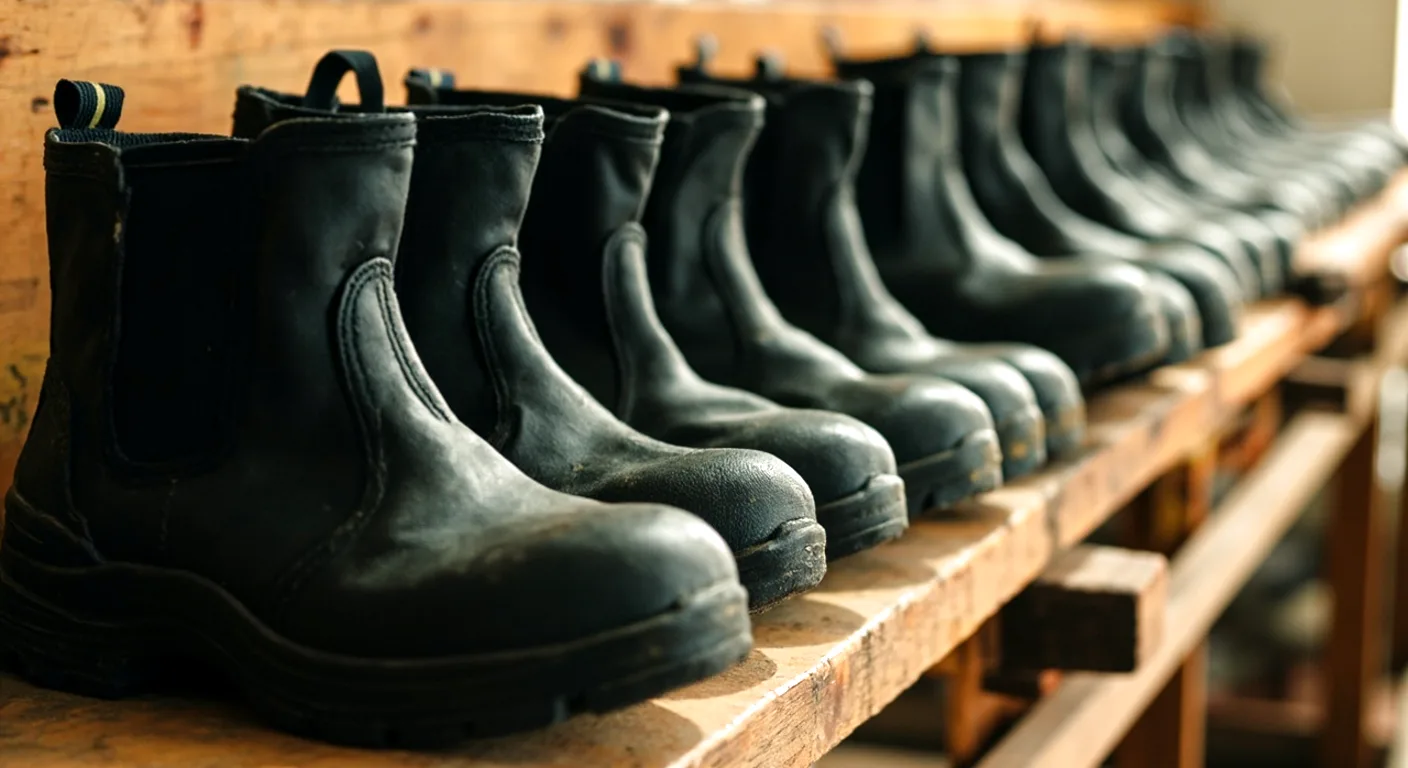
Safety footwear is the one PPE item every person on a plant floor wears for the entire shift, every shift. It is also the item most often bought on price alone, and the one that fails an audit fastest when the paperwork is thin.
This guide is for plant managers, safety officers, and procurement teams buying safety shoes and industrial footwear in bulk for factories, warehouses, and construction sites.
What IS 15298 actually covers
Indian safety footwear is specified under IS 15298, which runs in parts. The part that matters for most industrial buyers is the one covering safety footwear — footwear fitted with a toecap rated to withstand a 200 joule impact. Separate parts cover protective footwear with a lower-rated toecap and occupational footwear with no toecap at all.
Two things follow, and both matter at the purchase order stage. First, “safety shoe” is not a single specification — a shoe with no toecap is still legitimately sold as occupational footwear, so a PO that says only “safety shoes” has specified nothing enforceable. Second, add-on properties are declared separately: antistatic behaviour, energy absorption in the seat region, midsole penetration resistance, and water resistance are each declared against the standard.
Any bulk safety shoes manufacturer quoting you should state the standard, the part, and the declared properties for each model on the quote itself.
Steel toe or composite toe
Both meet the same impact rating when certified. The difference is operational.
- Steel toe — the default for general manufacturing, fabrication, and heavy material handling. Lower cost, well understood, heavier.
- Composite toe — non-metallic, lighter, and does not conduct heat or cold the way steel does. Preferred where staff walk long distances, work in cold storage, or pass through metal detection.
A plant with mixed roles usually ends up ordering both. Decide by role, rather than standardising on one because it is simpler to raise a single line item.
| Steel toe | Composite toe | Soft toe | |
|---|---|---|---|
| Impact rating | 200 J | 200 J | none |
| Weight | Heaviest | ~30% lighter | Lightest |
| Metal detector | Triggers it | Passes | Passes |
| Thermal conduction | Conducts heat and cold | Insulates | n/a |
| Typical use | General industrial, lowest cost | Airports, electrical work, cold stores, long shifts | Service, hospitality, retail floors |
| Cost | Lowest | Premium over steel | Lowest |
The sole decides more than the toe
Toe caps prevent one injury type. Soles prevent the one that occurs most on Indian shop floors, which is slips and falls.
- Slip-resistant nitrile or rubber — wet processes, food and beverage, dairy, housekeeping and facility teams.
- Polyurethane (PU) dual density — the general-purpose workhorse. Light, comfortable over long shifts, not for high heat.
- Heat-resistant rubber — foundries, welding bays, furnace areas. PU soles are the wrong choice here and will deform.
- Penetration-resistant midsole — construction and demolition, where nails and rebar are underfoot.
- Electrically insulating or antistatic — electrical maintenance and electronics assembly respectively. These are opposite requirements and are routinely confused.
| Sole | Grip when wet | Heat resistance | Abrasion life | Fails by |
|---|---|---|---|---|
| Single-density PU | Moderate | Low | Moderate | Compression, flattening underfoot |
| Dual-density PU | Good | Low to moderate | Good | Midsole breakdown before outsole wear |
| Rubber | Best | Highest | Highest | Weight and cost, not performance |
| PVC | Good on wet, poor on oil | Low | Moderate | Hardening and cracking with age |
When a plant needs which
A short mapping that covers most sites:
- Assembly and general production — steel toe, PU dual density, antistatic.
- Wet processing and cold storage — composite toe, nitrile slip-resistant sole.
- Foundry, welding, heat treatment — steel toe, heat-resistant rubber sole, higher ankle.
- Construction and civil works — steel toe, penetration-resistant midsole, ankle boot.
- Warehouse and logistics operations — composite toe, light PU sole, low-cut for long walking shifts.
- Electrical maintenance — electrically insulating sole, no metal eyelets.
Test certificates and the audit file
A shoe that meets the standard and a shoe you can prove meets the standard are different things once an auditor is on site. Ask your industrial safety shoes supplier for, and file against each PO:
- The test report for the model supplied, naming the standard and the declared properties.
- The BIS licence details where the product is under a licensing scheme.
- A batch or lot reference on the invoice that ties back to the report.
- Legible marking on the shoe itself — standard reference, size, manufacturer’s identification — not just on the carton.
Keep this with your industrial workwear and PPE records. Auditors ask for footwear and head protection together.
Sizing a bulk order across shifts
Safety shoes cannot be issued from a general size curve the way t-shirts can. A shoe that is one size wrong is a shoe that gets removed by the second week.
The method that works:
- Run a measurement drive per shift, not per department.
- Record UK size and width, not size alone. Width complaints are the majority of returns.
- Hold a buffer of 5 to 10 per cent in the middle sizes at your stores for new joiners.
- Issue against a signed acknowledgement per employee. This is your replacement-cycle baseline and your audit evidence in one document.
Annual rate contracts
Most plants over a few hundred heads are better served by a rate contract than by repeated spot orders. What one should fix:
- Per-pair rate by model, locked for the contract period, with no tier-2 delivery premium.
- Agreed replacement lead time for in-service staff and new joiners.
- Scheduled bulk drops aligned to your refresh cycle, without a fresh negotiation each time.
- A single consolidated invoice per drop, with the batch references attached.
How we supply safety shoes in bulk
We supply safety shoes, industrial footwear, and PPE to plants, construction sites, warehouses, and facility contractors across India, from 50 pairs per order upwards.
Our process:
- Model and specification agreed against the standard before quoting.
- On-site measurement drive across shifts.
- Sample pair approved before the bulk release.
- Per-pair pricing in writing, locked for the order.
- Test documentation supplied with the consignment for your audit file.
- Rate contracts with scheduled refresh drops.
If you are a plant manager, safety officer, or procurement lead sizing a bulk footwear order, the form below reaches our sales team. Quotes go out within 24 hours, and we work from 50 pieces per order.