Safety & PPE
Safety equipment manufacturer and supplier in India: what a plant actually has to buy
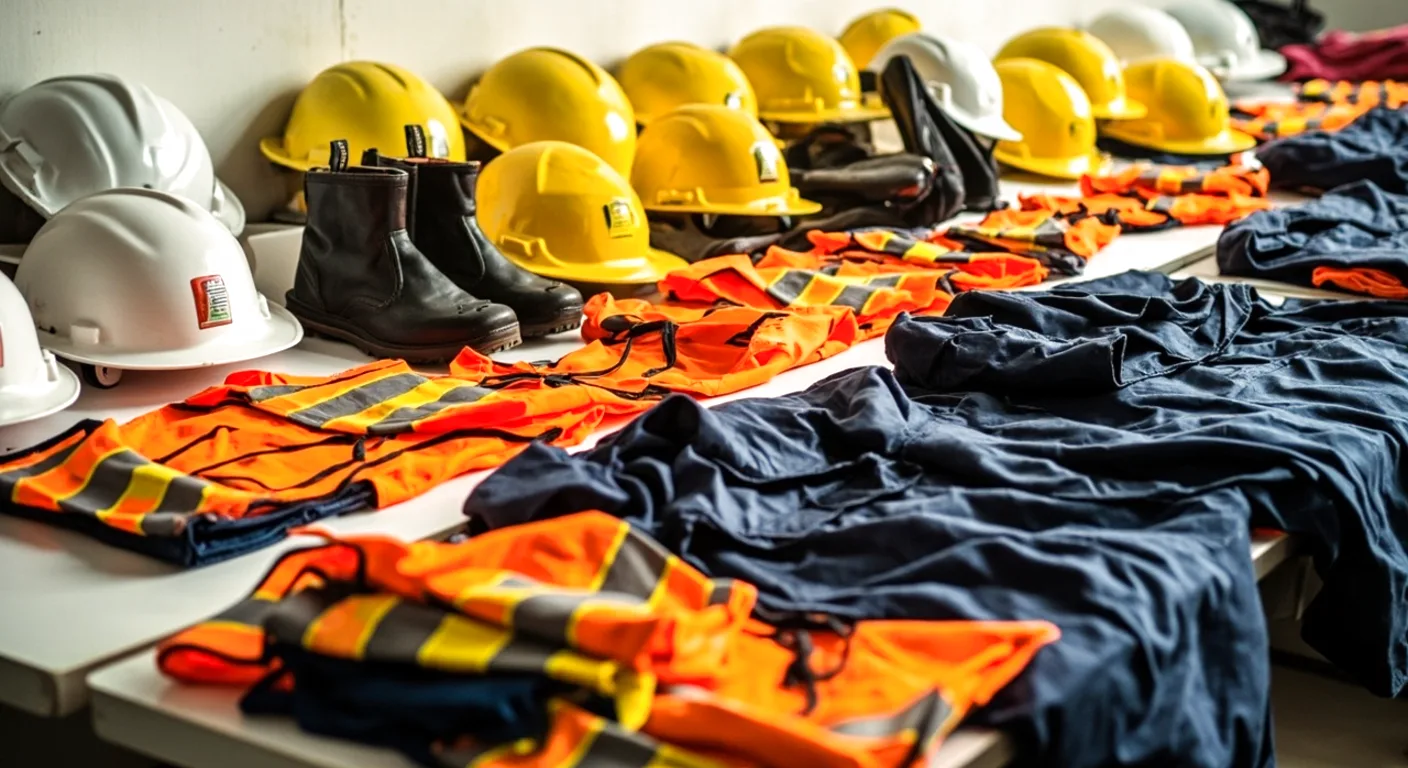
Most safety equipment enquiries arrive as a list of items. Helmets, shoes, gloves, a number against each.
The list is usually the wrong starting point, because it is assembled from what the last vendor happened to quote rather than from what the site is exposed to. This guide works the other way round: what the hazard is, what the standard says, and what that means on the purchase order.
The standards, in one place
Almost every argument about safety equipment in India resolves to one of these numbers. Ask for them by number and a vendor either has the certificate or does not.
| Item | Indian standard | What it covers |
|---|---|---|
| Safety footwear | IS 15298 (Part 2) | Toe protection, slip resistance, sole construction |
| Industrial safety helmet | IS 2925 | Shell, harness and impact for plant and site |
| High-visibility clothing | IS 15809 | Fluorescent ground and retro-reflective band layout |
| Industrial workwear | IS 13688 | Coveralls, boilersuits, general protective clothing |
One trap worth naming: IS 4151 is the two-wheeler rider helmet standard, not the industrial one. Rider helmets turn up on shop floors every year, and an auditor will flag them every time. If the helmet is for plant or site work, the number you want is IS 2925.
Working from the hazard, not the catalogue
Falling objects, overhead work
Industrial safety helmet to IS 2925. Specify the shell material (HDPE is the volume default, ABS holds up better against heat over a long service life) and the harness type. Ratchet adjusts one-handed and suits a helmet passed between shifts; pinlock is cheaper and fine when helmets are assigned to individuals.
Colour coding by role is a site convention, not something the standard requires. Decide the allocation, write it down, and keep it on file so the reorder matches the floor instead of arriving as one colour.
Foot injury, slips, hot or oily floors
Safety footwear to IS 15298 Part 2. The decisions that matter:
- Toe cap — steel is cheaper and heavier; composite is lighter and passes metal detectors. Both meet the 200-joule requirement when certified.
- Sole — PU is light, comfortable and dislikes heat. Dual-density PU is the volume default. Rubber and nitrile are what you buy when there is hot metal, oil or chemicals underfoot.
- The article number — this is the one people forget. “Bata safety shoe” is not a specification. “Bata, article number X, IS 15298 Part 2, steel toe, dual-density PU sole” is. A discontinued article means a mixed floor and a fresh approval cycle.
Moving vehicles, low light, road work
High-visibility clothing to IS 15809. Class 2 is the sleeveless or short-band garment for yard and warehouse work. Class 3 carries bands on the sleeves, body and shoulders and is what road work, night work and moving-plant environments need.
The question that decides whether you reorder in six months or three years: is the reflective tape stitched or heat-glued? Glued tape lifts at the edges after a few industrial washes. Stitched down both edges costs slightly more and is the single best predictor of whether the garment survives its first year. Ask, and put the answer in the contract.
Chemical splash, sparks, general plant work
Coveralls and boilersuits to IS 13688. Specify fabric weight, whether it needs to be flame-retardant treated, and stud versus zip front. A zip under a welding arc is a bad idea; studs with a covering flap are the usual answer.
Buying it as a kit, not as SKUs
The reason to consolidate is not price. It is that a PPE kit bought as separate line items from separate vendors arrives on separate dates, with separate certificates in separate formats, and the site is non-compliant until the last box lands.
Bought as a kit on a single purchase order, the whole issue arrives together, the certificates come in one file, and there is one person to call when something is short. For a contractor running several sites, this is usually worth more than the few percent a split order might save.
A practical kit for an Indian plant floor:
- Safety helmet to IS 2925, colour-coded by role or contractor
- Safety shoes to IS 15298, sized on site rather than guessed
- Hi-vis vest or jacket to IS 15809, Class 2 or Class 3 by exposure
- Coverall or workwear set to IS 13688
- Gloves and eye protection against the specific hazard
The certificate file is the deliverable
Buyers underrate this. The equipment is half the purchase; the paperwork is the other half, and it is the half that gets examined.
Ask for test certificates in the format your auditor expects, filed against the article number you actually received, not against a generic brand statement. A vendor who cannot produce that is exposing you, however good the product is. It is worth asking before the order, not after the audit.
Replacement cycles nobody budgets for
Safety equipment has a service life whether or not it has been hit.
- Helmets degrade under UV even unused, and any helmet that takes a real impact is finished — the shell absorbs energy by deforming, so “it looks fine” is not the test. Replace against the manufacturer’s stated life.
- Hi-vis fails at the fluorescent ground before the tape goes. On standard polyester that is roughly 25 industrial washes; heavier laundering shortens it.
- Footwear is driven by sole wear and by the toe cap having taken a hit.
Budget a refresh cycle at purchase time. An auditor who finds five-year-old helmets on an active site will not care which brand is printed on them.
What to send a vendor for a quote
Send this and you get a real quote in one round instead of four:
- Headcount per site, and shift pattern
- The hazards, in a sentence each
- Any approved-vendor list or article numbers already specified
- Whether helmets are assigned or shared
- Delivery city and the date you need it on site
How we supply
Sri Ganesh Textiles supplies safety equipment across footwear, head protection, high-visibility clothing and workwear against the brand and standard you already specify, with test certificates in the file and sizes measured on site rather than guessed. Minimum 50 pieces per line.
If your list is not settled, tell us the hazard and the headcount and we will come back with options and the trade-off stated, rather than a single line and a price.
See safety footwear · safety helmets · reflective jackets, or request a quote and we will come back inside 24 hours.