IT & Corporate
Corporate t-shirt manufacturer: GSM, fabric, printing, and event lead times
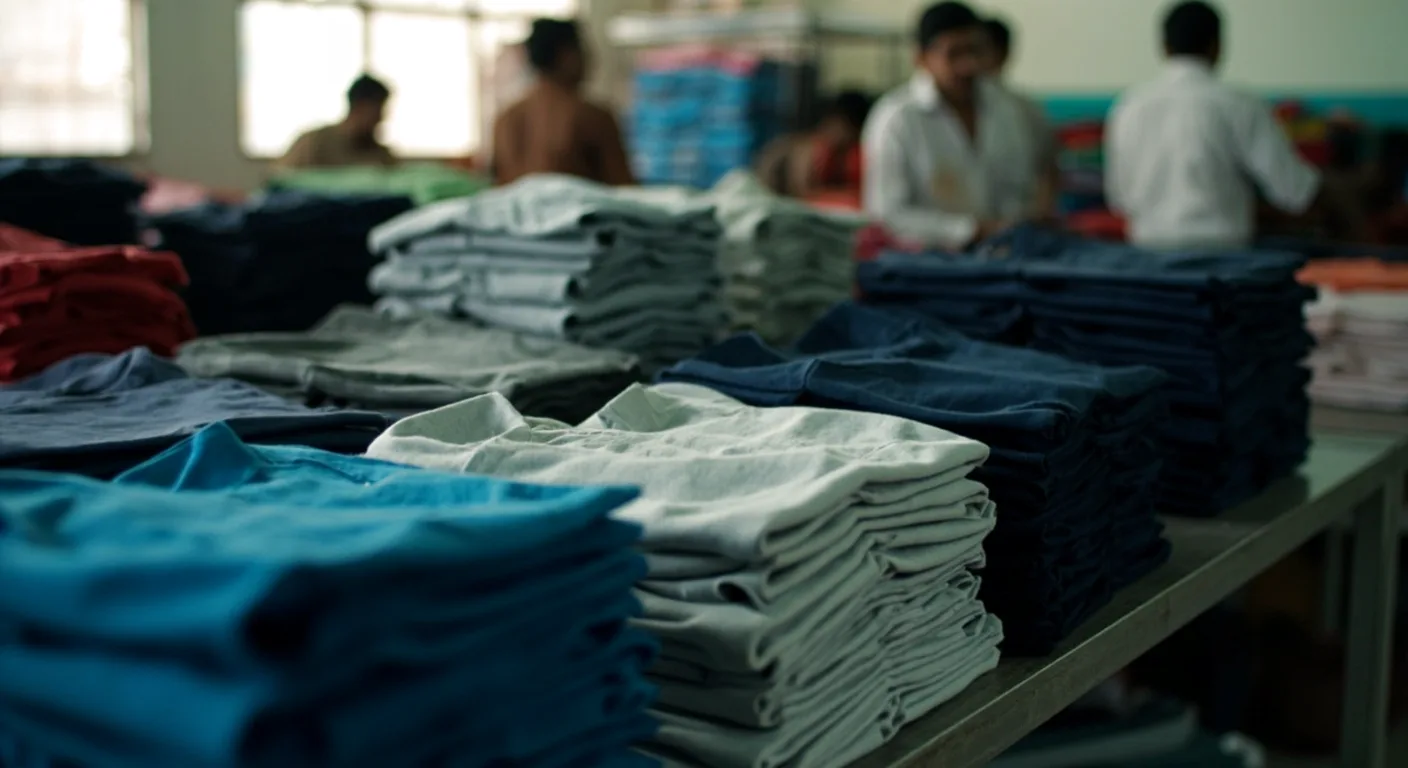
A branded t-shirt is the cheapest item in a corporate uniform programme and the one most likely to be judged in public. It goes on stage at the annual day, into the group photograph, and onto a LinkedIn post. The specification is short, which is exactly why it gets skipped.
This guide is for HR teams, admin heads, brand managers, and procurement officers ordering corporate and branded t-shirts in bulk.
Start with GSM, not with price
GSM is grams per square metre — the weight of the knitted fabric. It is the single number that decides how the shirt looks, drapes, and survives washing.
- 160 GSM — light. Suitable for one-day events and giveaway volumes where the shirt is worn a handful of times. Thin enough that a dark inner garment shows through a light colour.
- 180 GSM — the working default for company t-shirts meant to be worn repeatedly. Holds shape, takes print well, acceptable in Indian summer.
- 200 GSM and above — heavier, more structured, better for cooler regions and for shirts issued as part of a daily uniform rather than an event.
A quote that does not state GSM is not a quote. Two shirts at the same per-piece price can be 40 grams per square metre apart, and the difference is visible after three washes.
Cotton, poly-cotton, or dry-fit
Each is right for a different use, and the mistake is to pick one for the whole company.
- 100 per cent cotton — softest hand feel, best for print, most comfortable in heat. Shrinks unless pre-shrunk or bio-washed, and creases. Specify combed cotton and a pre-shrink treatment.
- Poly-cotton blend — the durability compromise. Holds colour and shape through repeated industrial washing, shrinks far less, costs less. The usual choice for factory and plant teams and for anything issued in quantity.
- Dry-fit polyester — moisture-wicking knit for sports days, marathons, outdoor drives, and logistics and field teams working in the sun. Takes sublimation printing well and screen print poorly.
Screen printing against embroidery
These are not interchangeable, and the decision changes both cost and lead time.
Screen printing suits large designs, bold colour, and high quantities. Cost per piece drops sharply with volume because setup is per colour and per design, not per shirt. It is right for event tees, campaign shirts, and large chest or back graphics. It sits on the fabric, so it will show wear before the shirt does.
Embroidery suits small marks — a chest logo, a name, a department tag. It reads as more formal, survives washing far longer, and costs per stitch count rather than per colour. It is right for anything worn as workwear rather than as an event item, and for customer-facing corporate teams.
Many orders end up with both: an embroidered chest logo and a screen-printed back. Quote them as separate lines.
Colour matching and what a supplier can commit to
Brand teams usually arrive with a PMS reference. What is honest to expect:
- Garment colour is dyed at the fabric stage. On a bulk run, a supplier matches to the closest available shade and confirms it against a physical swatch. Approve the swatch in daylight, not on a screen.
- Print colour can be mixed to a PMS reference far more closely than garment colour, because the ink is mixed for the job.
- Cross-batch consistency is the real risk. If you will re-order, ask for the dye lot to be reserved or for a master swatch to be retained against your account.
Never approve a colour from a photograph. Ask for the physical sample, and record the approval.
Logo placement
Standard placements, and what each is for:
- Left chest — the default for company identity. Small, embroidered or printed, works across every role.
- Full front — campaign and event graphics.
- Full back or upper back — reads at a distance, which is why field and event teams use it.
- Sleeve — secondary marks, partner logos, or role identifiers.
Fix placement measurements on the approved sample in centimetres from the shoulder seam. “Left chest, standard” is not a specification and will vary between operators.
Lead times for event tees
The timeline that repeatedly catches teams out:
- Specification and quote — decide GSM, fabric, colour, decoration method.
- Sample — one stitched and decorated piece for approval. This is the step people skip, and it is the only step that catches a wrong colour before it is on 800 shirts.
- Bulk production — driven by quantity, colour count, and decoration method. Embroidery on high counts runs slower than screen printing.
- Dispatch and delivery — plus buffer if the event is out of station.
Work backwards from the event date and add a week you do not plan to use. A custom t-shirt bulk supplier promising a large decorated run in a few days is either holding blank stock in exactly your colour or is about to skip the sample.
How we run bulk t-shirt orders
We supply corporate, branded, and custom t-shirts to IT companies, manufacturing groups, event teams, and institutions across India, from 50 pieces per order upwards.
Our process:
- GSM, fabric, and colour confirmed against a physical swatch.
- Decorated sample approved before bulk release.
- Placement fixed in measurements on the approved sample.
- Per-piece pricing in writing, locked for the order.
- Master swatch retained for re-orders.
- Pan-India delivery.
If you are planning a branded t-shirt order for an event, a campaign, or a full staff rollout, the form below reaches our sales team. Quotes go out within 24 hours, and we work from 50 pieces per order.